
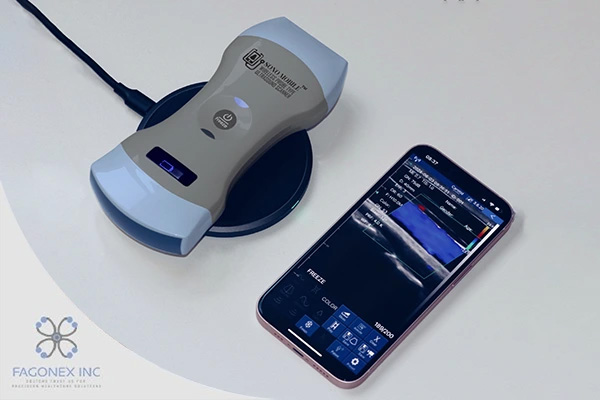
The evolution of medical imaging has consistently moved toward greater portability, efficiency, and real-time clinical decision-making. In recent years, wireless ultrasound probes have emerged as a transformative innovation, reshaping how healthcare professionals perform diagnostic imaging across a wide range of clinical environments. From emergency departments and intensive care units to outpatient clinics and remote settings, wireless technology is redefining accessibility and workflow in modern medicine.
For companies like Sono Mobile™, which focus on advancing handheld ultrasound solutions, wireless probes represent more than just convenience; they embody a paradigm shift toward point-of-care imaging that is faster, smarter, and more integrated into everyday clinical practice.
This article provides a comprehensive, balanced, and professional analysis of wireless ultrasound probes, examining their advantages, limitations, and ideal use cases. Whether you are a physician, resident, or healthcare administrator, understanding these factors is essential for making informed procurement and clinical decisions.
What Is a Wireless Ultrasound Probe?
A wireless ultrasound probe is a compact, handheld imaging device that transmits ultrasound data to a display; typically a smartphone, tablet, or computer, via wireless technologies such as Wi-Fi or Bluetooth. Unlike traditional ultrasound systems that rely on cables connecting probes to a console, wireless probes eliminate physical constraints and allow for greater mobility.
These devices typically integrate:
- A transducer (linear, convex, or phased array)
- Built-in processing hardware
- Rechargeable battery
- Wireless communication module
- Companion software or mobile application
Modern wireless probes, such as those offered by Sono Mobile™, often support multiple imaging modes, including:
- B-mode (brightness imaging)
- M-mode (motion analysis)
- Color Doppler
- Power Doppler (PDI)
- Pulsed Wave Doppler (PW)
Some advanced models even combine multiple probe types into a single device, offering multi-frequency and multi-application capabilities; a critical advantage for clinicians performing diverse examinations.
Pros of Wireless Ultrasound Probes
Portability and Mobility
One of the most significant advantages of wireless ultrasound probes is their unmatched portability. These devices can easily fit into a pocket or small bag, allowing clinicians to carry them between rooms, departments, or even off-site locations.
This mobility is particularly beneficial in:
- Emergency medicine
- Ambulance and pre-hospital care
- Rural or remote healthcare settings
- Bedside examinations in hospitals
Point-of-Care Efficiency (POCUS)
Wireless probes are a cornerstone of Point-of-Care Ultrasound (POCUS), enabling immediate imaging at the patient’s bedside. This reduces delays associated with traditional imaging workflows and enhances clinical decision-making. Their growing role in handheld ultrasound in emergency medicine has also transformed rapid bedside assessment and critical care response.
Benefits include:
- Faster diagnosis
- Immediate treatment planning
- Reduced patient transport
- Improved workflow efficiency
Cable-Free Convenience
The absence of cables significantly improves usability and reduces clutter in clinical environments. This is particularly important in high-pressure settings like ICUs and operating rooms where space and efficiency are critical.
By eliminating wired connections, wireless ultrasound probes enhance workflow optimization, allowing healthcare professionals to move freely around the patient without restrictions. This flexibility improves ergonomics and reduces setup time, enabling faster examinations and quicker clinical decisions. In infection-sensitive environments, fewer cables also contribute to better hygiene control by minimizing contact surfaces and simplifying disinfection protocols.
Devices like Sono Mobile™ wireless ultrasound systems further support seamless integration with mobile platforms, enhancing real-time imaging and data sharing. Overall, cable-free design plays a vital role in modern point-of-care ultrasound (POCUS) applications, improving both efficiency and patient care outcomes.
Additionally, fewer cables mean:
- Reduced risk of contamination
- Easier cleaning and disinfection
- Lower risk of mechanical damage
Cost-Effectiveness
Compared to traditional cart-based ultrasound systems, wireless probes are generally more affordable. This makes them accessible to a broader range of healthcare providers, including small clinics, private practices, and emerging medical facilities with limited budgets. Lower upfront investment allows organizations to adopt advanced imaging technology without significant capital expenditure. In addition, reduced maintenance, fewer hardware components, and software-based upgrades contribute to long-term cost savings.
Wireless solutions like Sono Mobile™ also eliminate the need for dedicated imaging rooms, further decreasing operational costs. This affordability supports scalability, enabling healthcare networks to equip multiple departments or locations with portable ultrasound capabilities, ultimately enhancing diagnostic efficiency and expanding patient access to quality care. This makes them accessible to:
- Small clinics
- Private practices
- Educational institutions
- Emerging healthcare markets
For administrators, this translates into:
- Lower capital expenditure
- Reduced maintenance costs
- Scalability across departments
Seamless Integration with Smart Devices
Wireless probes leverage the power of modern smartphones, tablets and laptops, offering:
- High-resolution displays
- Touchscreen controls
- Easy data storage and sharing
- Integration with cloud platforms and EMR systems
This connectivity enhances collaboration and enables telemedicine applications.
Versatility and Multi-Application Use
Devices like Sono Mobile™ wireless probes often support multiple clinical applications, including:
- Abdominal imaging
- Obstetrics and gynecology
- Cardiac assessments
- Musculoskeletal evaluations
- Vascular studies
Some models like Sono Mobile™ CL64 even combine linear, convex, and phased array capabilities in one device, reducing the need for multiple probes. This multi-functionality is a major advancement in handheld ultrasound technology, as it allows clinicians to seamlessly switch between different imaging applications without changing equipment. For example, a physician can perform vascular access using a linear mode, quickly transition to abdominal scanning with a convex mode, and then assess cardiac function using a phased array; all within the same examination.
This level of versatility is particularly valuable in fast-paced clinical environments such as emergency departments, critical care units, and outpatient settings, where time efficiency and diagnostic accuracy are essential. By consolidating multiple probe functions into a single device, healthcare providers can reduce equipment costs, minimize training requirements, and streamline workflow processes. Devices like Sono Mobile™ are designed with this integrated approach in mind, supporting comprehensive point-of-care ultrasound (POCUS) applications.
Additionally, multi-probe technology enhances portability, as clinicians no longer need to carry several probes or rely on bulky systems. This contributes to improved mobility, faster response times, and greater convenience in both hospital and remote healthcare environments. Ultimately, it empowers clinicians to deliver more efficient, accurate, and patient-centered care.
Cons of Wireless Ultrasound Probes
Battery Limitations
Wireless probes rely on rechargeable batteries, which can be a limitation in long shifts or high-volume settings. Battery life typically ranges from 2 to 6 hours depending on usage.
Challenges include:
- Need for frequent recharging
- Potential downtime during critical use
Image Quality Compared to High-End Systems
While wireless probes have significantly improved, they may not yet match the image quality of high-end cart-based ultrasound machines, especially in complex or specialized imaging.
Limitations may include:
- Lower penetration depth in some models
- Reduced resolution in challenging cases
- Limited advanced imaging features
Learning Curve
Although designed to be user-friendly, transitioning from traditional systems to wireless probes may require training.
Users must become familiar with:
- Mobile interfaces
- App-based controls
- Device pairing and connectivity
Data Security and Privacy Concerns
Wireless transmission of patient data introduces cybersecurity considerations. Healthcare providers must ensure compliance with regulations such as:
- HIPAA (in the U.S.)
- PHIPA (in Ontario, Canada)
Secure data handling is essential when using cloud-based platforms or mobile devices.
Wireless vs. Wired Probes: Head-to-Head Comparison
| Feature | Wireless Probes | Wired Probes |
| Portability | Excellent | Limited |
| Setup Time | Minimal | Moderate |
| Image Quality | High | Very high |
| Cost | Lower | Higher |
| Connectivity | Wireless (Wi-Fi/Bluetooth) | Physical cable |
| Battery Dependency | Yes | No |
| Durability | High | High |
| Best Use Case | POCUS, mobility | Advanced diagnostics |
In summary, wireless probes prioritize flexibility and accessibility, while wired systems remain superior for high-end, specialized imaging.
Clinical Settings Where Wireless Probes Shine
Emergency Medicine
Wireless probes enable rapid bedside assessments for:
- Trauma (FAST exams)
- Cardiac function
- Lung pathology
Speed is critical, and wireless devices deliver immediate results. This real-time capability is essential in emergency and critical care settings, where every second can directly impact patient outcomes. With point-of-care ultrasound (POCUS), clinicians can quickly identify internal bleeding, assess cardiac activity, or detect conditions such as pneumothorax without waiting for radiology support.
Wireless solutions like Sono Mobile™ further enhance this process by offering instant connectivity to mobile devices, enabling fast image acquisition and interpretation. This not only accelerates clinical decision-making but also improves workflow efficiency, reduces patient transfer risks, and supports timely intervention, ultimately elevating the standard of care in urgent medical situations.
Intensive Care Units (ICU)
In ICUs, minimizing patient movement is essential. Wireless probes allow clinicians to perform imaging without relocating critically ill patients.
Primary Care and Outpatient Clinics
General practitioners can use wireless ultrasound to enhance diagnostic capabilities and reduce referrals.
Medical Education
Students and residents benefit from:
- Hands-on training
- Real-time visualization
- Portable learning tools
Remote and Rural Healthcare
Wireless probes bridge the gap in underserved areas by providing access to diagnostic imaging where traditional systems are not feasible. Their compact size, portability, and ease of use make them ideal for deployment in remote clinics, mobile health units, and community outreach programs. Healthcare providers can perform on-site examinations without the need for bulky equipment or dedicated imaging infrastructure.
This capability is especially valuable in regions with limited access to radiology services, where early diagnosis can significantly improve patient outcomes. Devices like Sono Mobile™ allow clinicians to conduct abdominal, obstetric, and cardiac assessments in real time, reducing the need for long-distance patient transfers.
Additionally, wireless connectivity supports telemedicine, enabling images to be shared with specialists for remote consultation. This enhances diagnostic accuracy, supports collaborative care, and ultimately helps deliver equitable healthcare services to populations in geographically isolated or resource-limited settings.
What to Look for in a Wireless Ultrasound Probe
When selecting a wireless ultrasound device, healthcare professionals and administrators should consider the following factors:
Image Quality
Look for high-resolution imaging with multiple frequency options to support diverse clinical applications.
Battery Life
Ensure sufficient operating time for your clinical workflow, ideally with fast-charging capabilities.
Probe Versatility
Multi-function probes (like those offered by Sono Mobile™) can reduce costs and improve efficiency.
Software and User Interface
A well-designed app enhances usability, reduces training time, and improves workflow.
Connectivity Stability
Reliable wireless performance is critical for consistent clinical use.
Data Security
Ensure compliance with healthcare data protection standards.
Durability and Build Quality
Medical devices must withstand frequent use and cleaning.
Customer Support and Warranty
Strong after-sales support is essential for long-term reliability.
Are Wireless Ultrasound Probes Right for Your Practice?
The decision to adopt wireless ultrasound probes depends on your clinical needs, workflow, and budget.
Ideal for:
- Practices prioritizing mobility and speed
- Clinics adopting POCUS protocols
- Educational institutions
- Remote healthcare providers
Less Ideal for:
- Highly specialized imaging centers
- Facilities requiring advanced imaging modalities
- Environments with unreliable wireless infrastructure
For many modern healthcare settings, a hybrid approach; combining wireless probes with traditional systems, offers the best balance.
Conclusion
Wireless ultrasound probes represent a significant advancement in medical imaging, aligning with the broader trend toward portable, patient-centered, and technology-driven healthcare. While they may not fully replace traditional systems in all scenarios, their advantages in mobility, cost-effectiveness, and real-time diagnostics make them an invaluable tool in today’s clinical landscape.
Brands like Sono Mobile™ are at the forefront of this transformation, delivering innovative solutions that empower healthcare professionals to perform faster, smarter, and more accessible imaging.
For medical professionals, students, and healthcare administrators, investing in wireless ultrasound technology is not just a technological upgrade; it is a strategic move toward improving patient care, operational efficiency, and clinical outcomes.
As the technology continues to evolve, wireless ultrasound probes are poised to become a standard component of modern medical practice, redefining how and where diagnostic imaging takes place.