
Handheld Ultrasound in Emergency Medicine
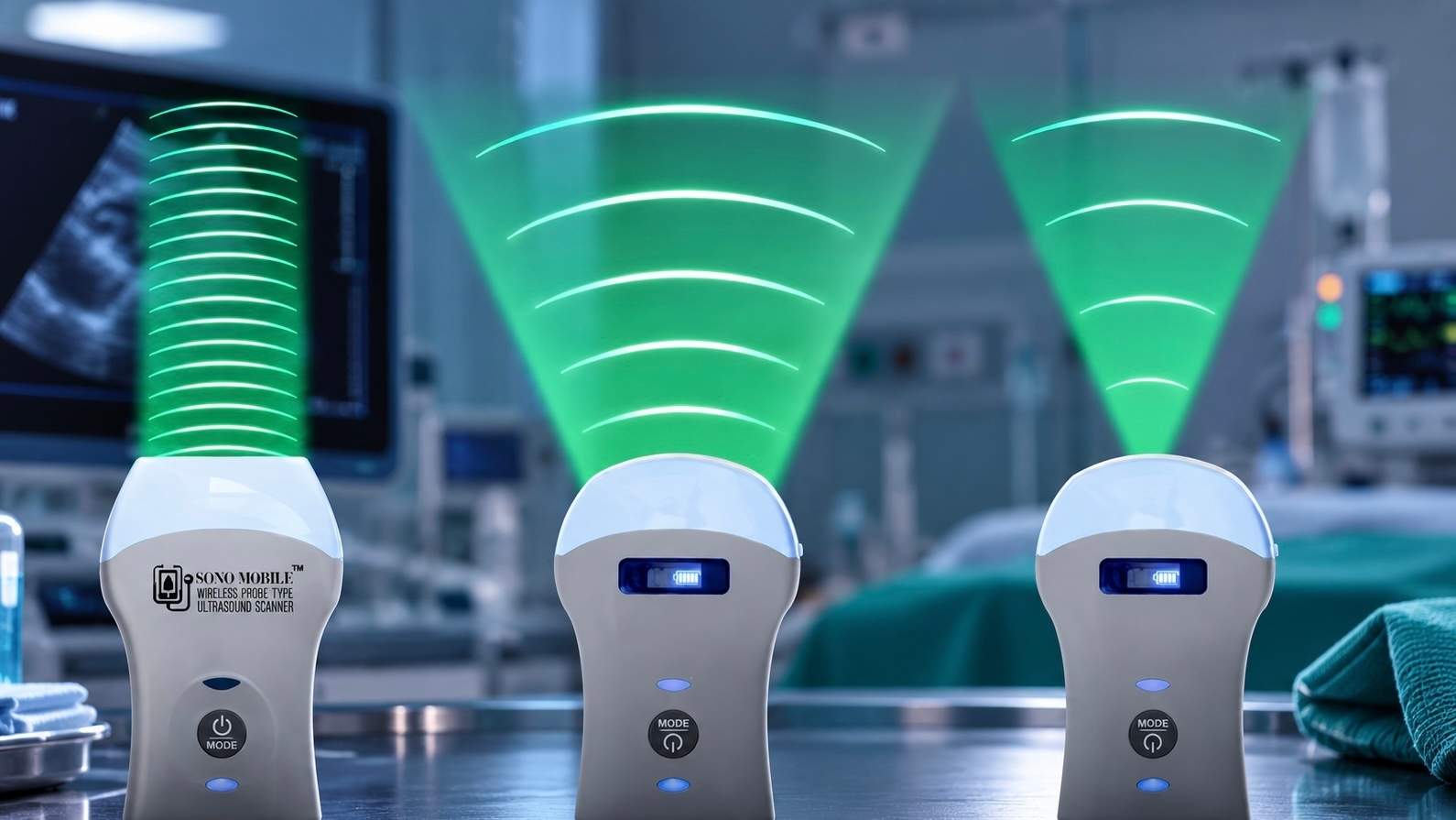
Handheld ultrasound brings focused imaging closer to the bedside, giving appropriately trained emergency clinicians access to point-of-care ultrasound without relying on a conventional cart-based system for every focused examination.
From trauma and undifferentiated shock to cardiac, lung and vascular assessment, portable ultrasound can support focused clinical questions while remaining part of a broader emergency evaluation.
Why Handheld Ultrasound Fits Emergency Medicine
Emergency departments frequently require focused information while assessment, stabilization and treatment are occurring. Clinical ultrasound can be performed at the point of care to address defined diagnostic or procedural questions and may be repeated when the patient's condition changes.
The American College of Emergency Physicians describes clinical ultrasound as ultrasound used for bedside evaluation of acute or critical medical conditions, including diagnostic assessment, procedure guidance and monitoring.
Bedside Availability
A handheld device can move with the clinician between examination rooms, resuscitation bays and other point-of-care environments, reducing dependence on the availability of a larger ultrasound cart for selected focused examinations.
Focused Clinical Questions
Emergency POCUS is generally performed to answer specific questions rather than replace comprehensive diagnostic imaging. Findings must be interpreted together with the clinical presentation and other testing when indicated.
Serial Reassessment
Because ultrasound can be performed at the bedside, focused examinations may be repeated when clinically appropriate to evaluate changes during resuscitation or ongoing management.
Procedure Guidance
Real-time ultrasound visualization can support selected bedside procedures, including vascular access, when performed by clinicians with appropriate training and competency.
For a broader overview of clinical ultrasound applications in the emergency department, visit our Emergency Medicine POCUS specialty page .
Common Uses of Handheld Ultrasound in Emergency Care
The appropriate examination depends on the clinical question, operator training, patient characteristics and the limitations of the available ultrasound system.
FAST and eFAST in Trauma
Focused Assessment with Sonography in Trauma (FAST) evaluates specific spaces for free fluid in the appropriate trauma setting. The extended FAST examination adds thoracic assessment, including evaluation for findings associated with pneumothorax and hemothorax.
FAST and eFAST are focused examinations and should be interpreted within the overall trauma assessment. A negative examination does not exclude every traumatic injury or replace CT when additional imaging is clinically indicated.
Focused Cardiac Ultrasound
Focused cardiac ultrasound may contribute information during evaluation of presentations such as hypotension, cardiac arrest, dyspnea or suspected pericardial effusion. Depending on the clinical context, clinicians may assess cardiac activity, gross ventricular function, pericardial fluid and selected signs of right-heart strain.
For a dedicated overview, see Cardiac POCUS .
Lung Ultrasound
Emergency lung ultrasound can assess focused findings such as lung sliding, A-lines, B-lines, pleural fluid and peripheral consolidation. These findings can contribute to the evaluation of patients presenting with acute respiratory symptoms when interpreted in clinical context.
For technique, artifacts and common findings, explore our Lung Ultrasound Guide or the Lung POCUS specialty page.
Shock and Hypotension
Multi-organ POCUS may combine focused cardiac, lung, abdominal and vascular assessment when evaluating undifferentiated hypotension. Ultrasound findings should be integrated with the history, physical examination, hemodynamic information and other diagnostic testing.
For a structured approach to hypotension, see our RUSH Exam Ultrasound Guide .
Ultrasound-Guided Vascular Access
Ultrasound can provide real-time visualization of vascular anatomy and needle approach during selected peripheral and central vascular access procedures. This can be particularly useful when surface landmarks are difficult or previous access attempts have been unsuccessful.
Appropriate aseptic technique, training and procedural protocols remain essential.
DVT and Selected Vascular Assessment
Focused compression ultrasound may be used by appropriately trained clinicians when evaluating suspected lower-extremity deep vein thrombosis. In patients with suspected pulmonary embolism, POCUS may provide complementary cardiac, lung or venous findings, but it does not universally replace definitive diagnostic testing.
Handheld vs. Cart-Based Ultrasound in the Emergency Department
Handheld and cart-based ultrasound systems can both play useful roles in emergency care. The appropriate platform depends on the clinical environment, required imaging capabilities, workflow and operator needs.
Handheld Ultrasound
- Compact and easy to move between care areas
- Can remain close to the clinician at the point of care
- Useful where space is limited
- Suitable for many focused bedside examinations
- Can support mobile, rural and transport workflows
Cart-Based Ultrasound
- Larger display and physical controls
- May provide broader advanced imaging capabilities
- Often supports a wider range of specialized transducers
- Useful for comprehensive or technically demanding examinations
- Typically requires more dedicated physical space
These platforms are not necessarily competitors. Many emergency departments can use handheld ultrasound for rapid focused assessment while maintaining cart-based or departmental imaging for examinations requiring broader capabilities.
What to Look for in a Handheld Ultrasound for Emergency Medicine
Device selection should reflect the examinations clinicians expect to perform rather than portability alone.
A Multi-Probe Handheld Option for Emergency POCUS
Sono Mobile® CL64
Emergency ultrasound often requires more than one transducer profile. A single clinical shift may involve abdominal imaging, focused cardiac assessment, lung ultrasound, vascular access or superficial structures.
Sono Mobile® CL64 combines convex and linear scanning with a phased-array preset in a compact wireless platform. This multi-purpose configuration is designed to support a range of point-of-care applications without requiring clinicians to carry multiple separate handheld probes.
- Convex, linear and phased-array scanning capabilities
- B, M, Color, PDI and PW imaging modes
- Wireless operation
- Compatible with iOS, Android and Windows platforms
- Designed for multi-organ point-of-care ultrasound workflows
One Portable Platform, Multiple Emergency Applications
A multi-probe handheld platform may be useful where clinicians move rapidly between different focused examinations and need access to both deeper and superficial imaging from the same portable system.
Device selection should always be based on intended clinical use, institutional requirements, clinician training and applicable regulatory considerations.
Related Emergency POCUS Resources
These pages cover individual clinical topics in greater depth, helping keep this article focused specifically on handheld ultrasound devices and emergency workflow.
Evidence & Further Reading
Emergency ultrasound should be practiced according to appropriate training, credentialing, institutional policy and applicable clinical guidelines.
ACEP Emergency Ultrasound Guidelines
American College of Emergency Physicians guidance covering the scope, training, governance and clinical use of emergency and point-of-care ultrasound.
View ACEP Guidelines →ACEP E-FAST Sonoguide
Clinical educational resource covering focused trauma ultrasound, including FAST and extended FAST applications and limitations.
View ACEP E-FAST Resource →ACEP Lung Ultrasound
Educational guidance covering bedside lung ultrasound, sonographic artifacts and common emergency applications.
View ACEP Lung Resource →ACEP Cardiac Ultrasound
Educational guidance for focused cardiac ultrasound in emergency and critically ill patients.
View ACEP Cardiac Resource →Handheld Ultrasound in Emergency Medicine FAQ
What is handheld ultrasound used for in emergency medicine?
Handheld ultrasound can support focused bedside assessment and procedure guidance in emergency care. Depending on clinician training and the clinical question, applications may include trauma assessment, focused cardiac and lung ultrasound, evaluation of shock, vascular assessment and ultrasound-guided procedures.
Can handheld ultrasound be used for FAST and eFAST?
A handheld system with appropriate transducer capabilities may be used for focused trauma ultrasound by appropriately trained clinicians. Examination quality, patient factors, device capabilities and operator competency should be considered, and additional imaging may still be required.
Can handheld ultrasound replace cart-based ultrasound in the ER?
Not in every situation. Handheld systems can be useful for many focused bedside examinations, while cart-based or comprehensive imaging systems may offer advantages for more technically demanding or advanced examinations. The two platforms can serve complementary roles.
What probe types are useful for emergency ultrasound?
Different applications may require different transducer profiles. Curvilinear or phased-array scanning can support deeper abdominal or cardiac applications, while linear transducers are commonly used for superficial structures, vascular access and selected lung examinations.
Is handheld ultrasound the same as POCUS?
No. POCUS describes the clinical practice of performing focused ultrasound at the point of care. A handheld ultrasound device is one type of equipment that may be used to perform POCUS.
Which Sono Mobile device is suited to multi-organ emergency POCUS?
Sono Mobile® CL64 combines convex and linear scanning with a phased-array preset and is designed for multi-organ point-of-care applications. The appropriate device should still be selected according to intended examinations, clinician needs and institutional requirements.
Bringing Focused Ultrasound Closer to the Bedside
Handheld ultrasound can extend access to focused imaging across emergency workflows where portability, rapid deployment and bedside availability are valuable. Its role is strongest when the device is matched to the clinical application and used within an appropriate training, documentation and quality framework.
Rather than replacing comprehensive imaging, portable ultrasound can complement established emergency pathways by helping trained clinicians address defined questions at the point of care.
Explore Emergency Medicine POCUS for the broader clinical specialty, or review the Sono Mobile® CL64 for a multi-probe handheld ultrasound option.
Educational Disclaimer: This content is provided for general educational and informational purposes and is not a substitute for professional medical judgment, formal ultrasound training, institutional protocols or comprehensive diagnostic imaging. Point-of-care ultrasound should be performed and interpreted by appropriately trained healthcare professionals within their scope of practice.